




WANT TO SAVE THIS RECIPE?
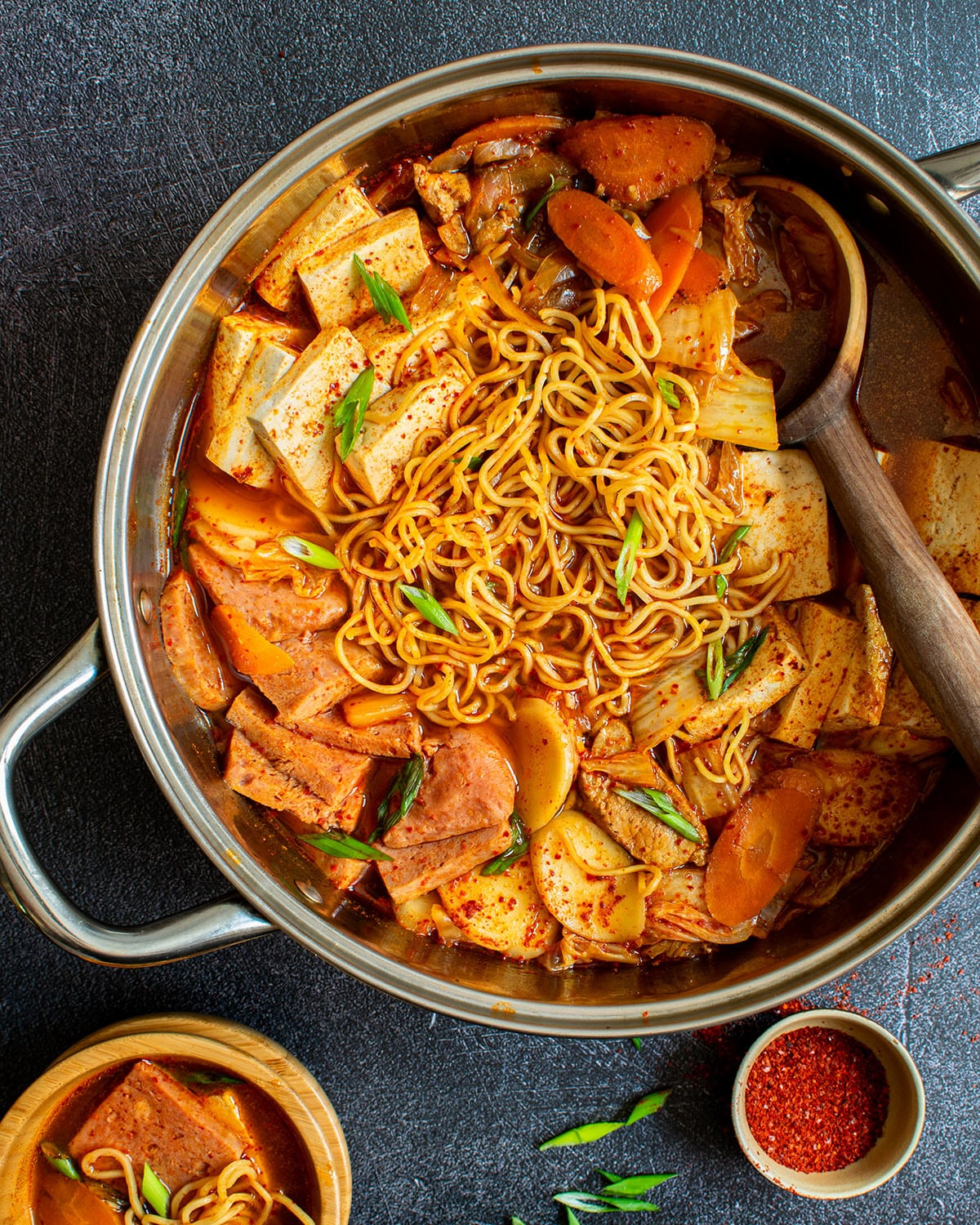
This budae jjigae recipe captures the soul of Korean army stew. It's bold, hearty, and packed with layers of spicy, savory flavor.

Jump to:
What makes this dish special
During my college days, my friends and I would find ourselves at some Korean bar almost every weekend (and some weekdays). Soju was the only alcohol on the menu, but the prices were low, and the food always hit the spot. I haven't been to a Korean bar in ages, but I was recently reminded of how good Korean bar food is. Whenever we went, my friends and I would always order rabboki, meat jun, or budae jjigae, also known as Korean army base stew. The stew is a hodgepodge of ingredients from spam to ramen noodles to kimchi, and it's oh so delicious!
Budae jjigae is a poor man's soup. Army men gathered leftover ingredients from the kitchen and put together a dish, hence the name Korean army base stew. Budae jjigae has since gained popularity and is now served at many Korean bars and restaurants. There are many different variations, some including rice cakes, others with hot dogs, and some even with cheese, but this recipe is a combination of my favorite ingredients.
Ingredients
- Kombu: Provides depth for the dashi broth, adding a savory base flavor.
- Dried anchovies: Add a rich umami and slightly sweet complexity to the broth. They are more traditional in Korean soup bases, adding a more robust flavor.
- Bonito flakes: Complete the dashi, adding smoky, intensely savory notes.
- Spam: Adds salty, fatty meat flavor and is often found in budae jjigae. Although I used original spam, you can experiment with other spam flavors.
- Pork belly: Contributes rich, fatty meatiness to the stew.
- Kimchi: Crucial for the sour-spicy flavor profile, while also adding a vegetable element.
- Rice cakes: Add chewy textural contrast while soaking up the broth. Use ovalette rice cakes and not the tubular shapes.
- Gochugaru: Korean red pepper flakes that add heat and a slightly sweet, fruity pepper flavor.
- Gochujang: Korean red pepper paste that adds thick, complex spiciness. Different brands have different spice levels; adjust the amount according to how spicy you want the stew.
- Rice wine: Helps balance the spicy and salty elements while adding subtle sweetness.
Substitutions and variations
- Protein: You can substitute pork belly with pork shoulder, chicken thighs, or shrimp for a seafood variation. You can also replace spam with hot dogs or fish cakes.
- Vegetables: Feel free to add more vegetables, such as spinach, napa cabbage, mushrooms, or bok choy.
- Toppings: For a cheesy version, top the soup with a slice of American cheese.
Recipe

Budae Jjigae
Ingredients
Dashi broth
- 3 dried shiitake mushrooms
- 1 3x3 inch kombu
- ½ medium onion peeled
- 2 garlic cloves
- 5 dried anchovies guts removed
- 6 cups water
- ½ cup bonito flakes
Stew
- 1 tablespoon oil
- ½ medium onion sliced
- 1 carrot sliced on a bias
- 2 cloves garlic minced
- ½ can spam sliced
- 4 ounces pork belly cut into 1 ½ inch pieces
- 1 cup kimchi chopped
- 4 ounces firm tofu sliced
- 1 cup ovalette rice cakes
- 3 ounces instant ramen noodles
Seasoning spice
- 2 tablespoons gochugaru
- 1 tablespoon gochujang
- 1 tablespoon soy sauce
- 1 tablespoon rice wine
Instructions
- Prepare dashi broth. Combine dried shiitake mushrooms, kombu, onion, garlic, dried anchovies, and water in a large pot. Bring to a boil over high heat. Reduce to a simmer and cook for 20 minutes. Remove from heat and add bonito flakes. Cover the pot and let sit for 10 minutes. Strain stock, discarding ingredients.
- Heat 1 tablespoon oil in a wide pot over medium-high heat. Add onion, carrot, and garlic and saute until onions have softened, about 3-4 minutes. Arrange spam, pork belly, kimchi, tofu, and rice cakes in the pot. Pour in dashi broth and bring to a boil.
- Mix together seasoning spice, including gochujang, gochugaru, soy sauce, and rice wine. Add to soup and mix together. Reduce heat to a simmer and cook for another 5 minutes.
- Add ramen noodles and cook until al dente, about 2-3 minutes. Remove from heat and serve.
Notes
Step-by-step instructions
Step 1: Make dashi
Start by creating a flavorful broth as the base for the stew. Dashi is a Japanese stock used in many Korean soups and stews.
If you can't find all of the ingredients, you can also purchase dashi stock powder. The powder is similar to chicken bouillon; simply add water, and you're good to go.
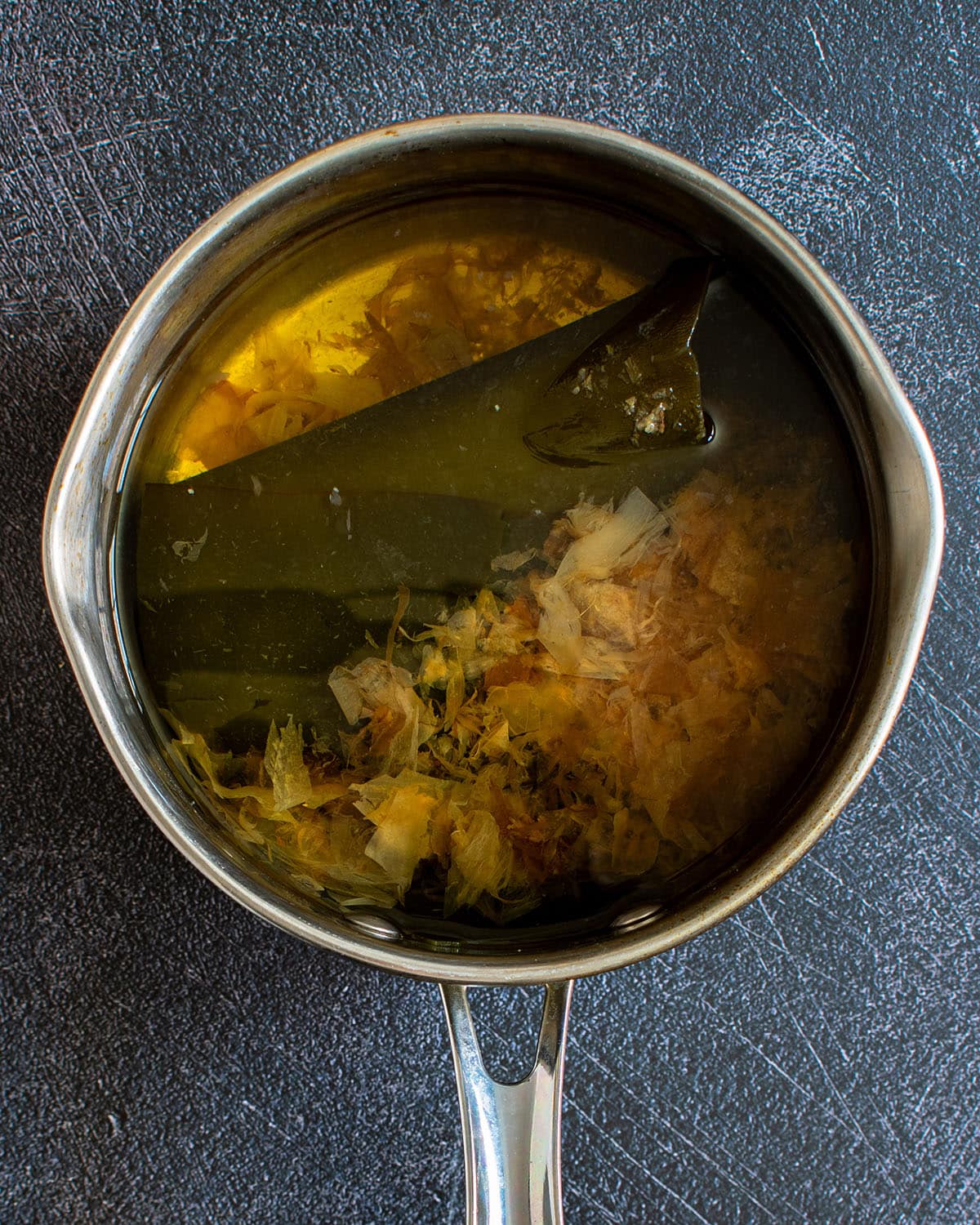
Many restaurants prepare budae jjigae with just water, but I truly believe that taking the time to make dashi completely changes the soup. The dashi adds more flavor to the soup, making it taste that much better.
I normally make dashi with just kombu and bonito flakes, but this version was taught to me while I was cooking at a Korean restaurant. We used it as a base for a myriad of sauces and stews; if they thought it was right, who was I to question it?
Step 2: Prepare stew
While the dashi is simmering, saute the vegetables. Most people let the ingredients simmer in the broth, but I like to saute the onions, carrots, and garlic to add more flavor to the stew. By now, you may have guessed, I'm all about maximum flavor.
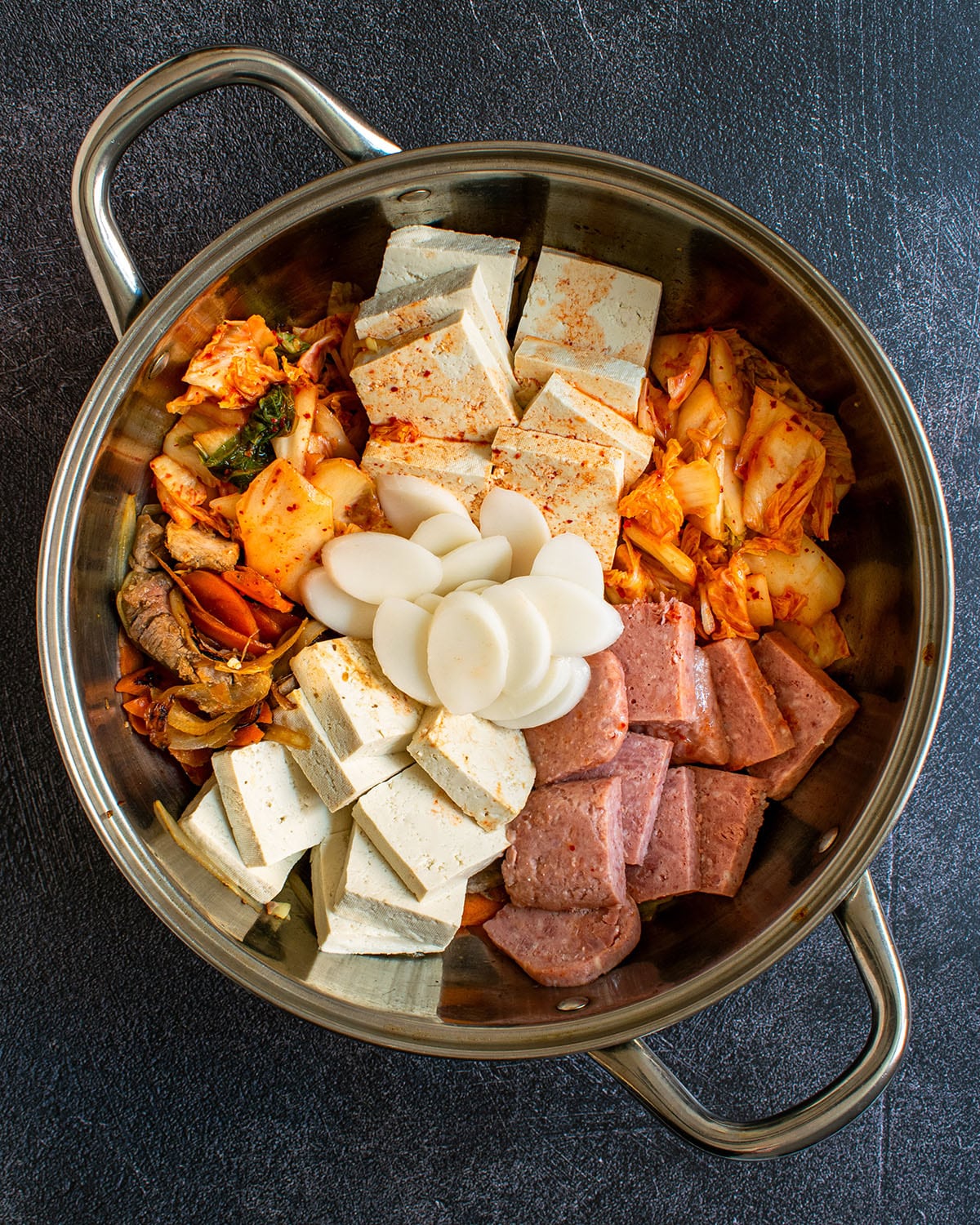
Add the remaining ingredients along with the dashi and bring it to a boil.
Recipe tip
To help the rice cakes cook faster, soak them in room-temperature water for 30 minutes before cooking. This will allow them to fully soften while cooking. You can also use fresh rice cakes if you can find them.
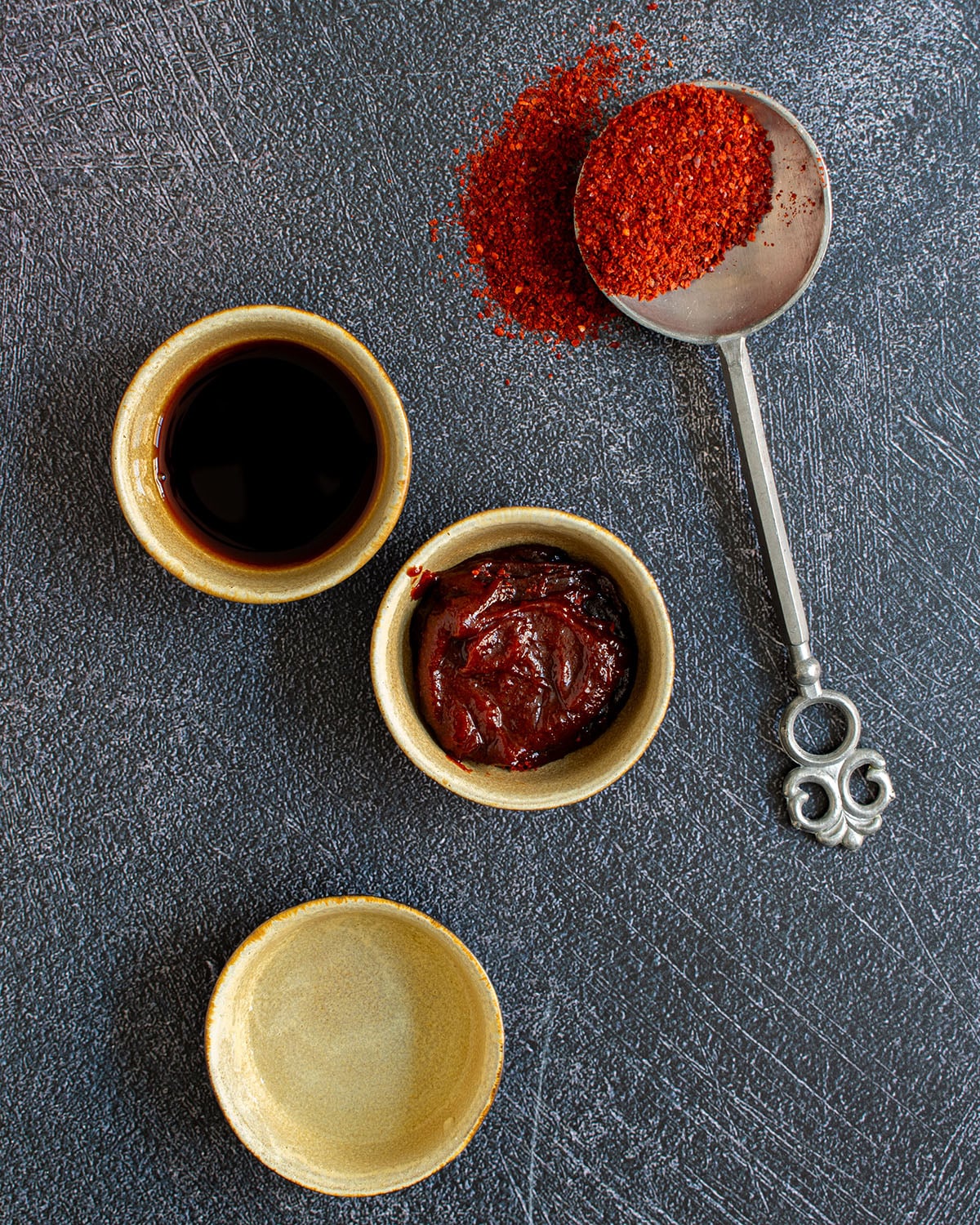
Season the budae jjigae with Korean chili paste (gochujang), soy sauce, Korean chili flakes (gochugaru), and rice wine. Add more or less of the chili paste and flakes depending on how spicy you want your stew.
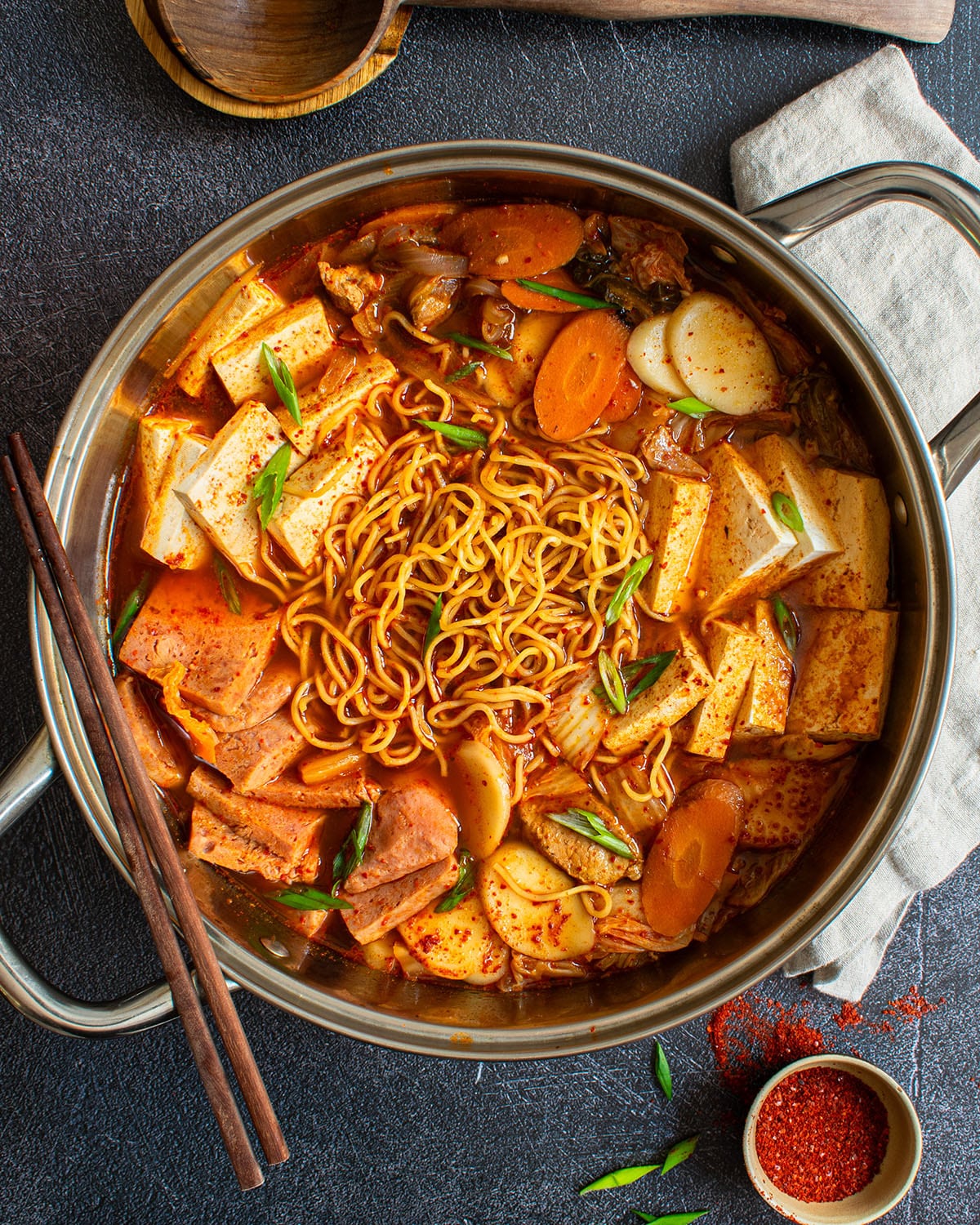
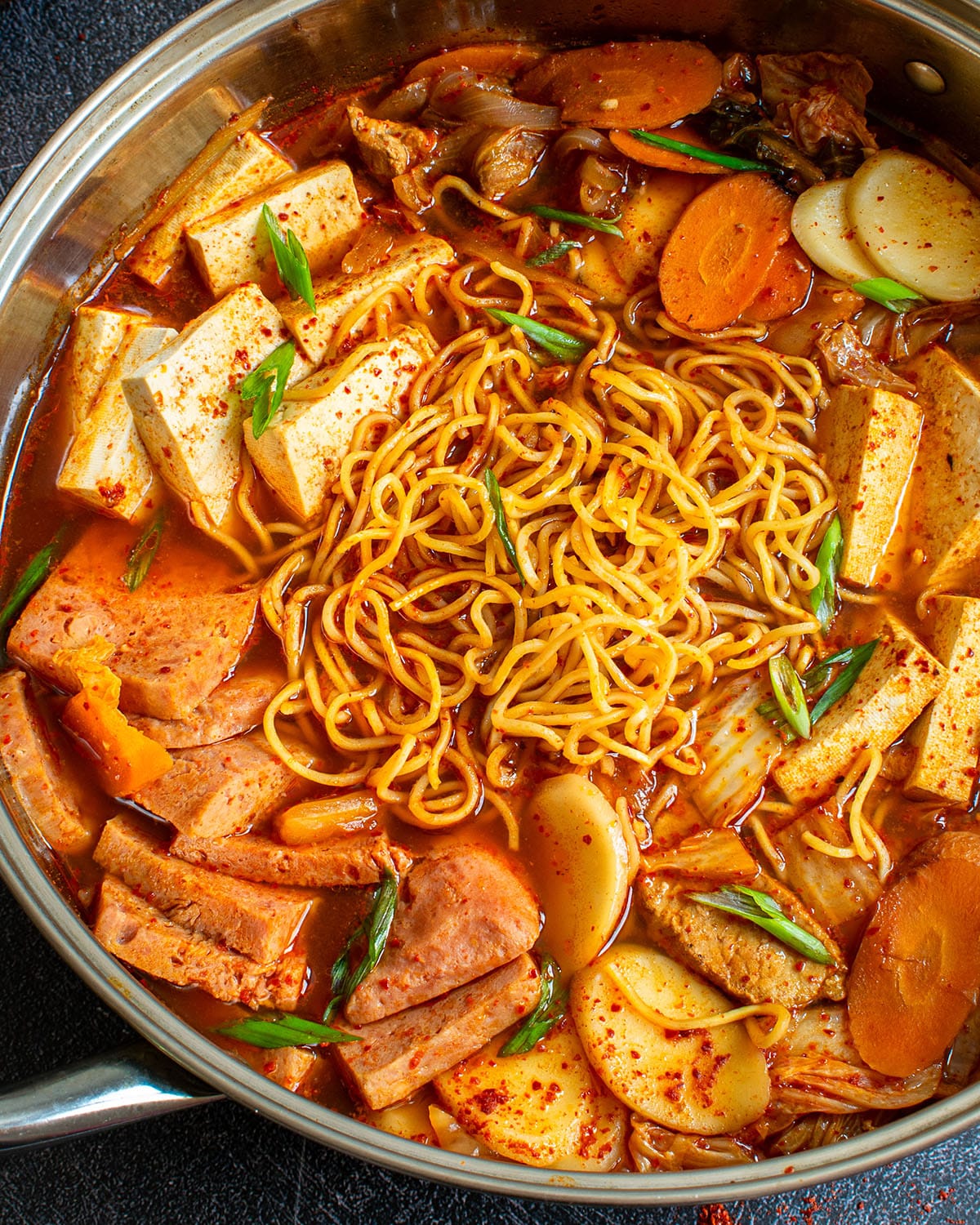
Finish the stew with some instant ramen noodles and get ready to dig in.
To eat budae jjigae the true Korean way, place the entire pot on the table and let the diners scoop out the soup themselves. This way, they can pick and choose which fillings they prefer. Great for drinking, the day after drinking, or just a sober night of fun!
Make-ahead and storage
- Make-ahead: You can make the dashi broth up to 2 days ahead of time. To save time, you can prep all the ingredients beforehand; however, it's best to cook the stew right before serving.
- Store: Keep leftovers in an airtight container in the refridgerator for up to 2 days.
Frequently asked questions
Any Korean instant ramen works well. Keep the noodles but discard the seasoning packets since the stew already has plenty of flavor.
Yes, you can substitute store-bought dashi powder or concentrate following package instructions for 6 cups of liquid. You can also use chicken or vegetable broth, though the flavor will be less authentic.
More Korean recipes
Looking for more Korean dishes? Try these:




Mary Frances says
This looks amazing! So many flavors, and perfect for sharing with friends!
cma0425 says
That's the idea, to share with your friends!
Kathleen says
This is great! I love 'catch-all' dishes! I always have so many leftovers and/or scraps and I hate to let them go to waste. This dish looks like the perfect thing to make!
cma0425 says
It is definitely a good chance to use all leftovers and still produce a great meal!
Katura says
Hi! This looks so delicious! I just have one question. How do I make/where can I get really good kimchi? Thanks in advance and thanks for this wonderful looking recipe!
cma0425 says
Kimchi should be available at most Asian markets and even Whole Foods. For the best kimchi, find one that is directly imported from Korea or locally. It is also best to buy the freshest kimchi at the market and let it ferment in your kitchen. Purchase one that still have liquid in the jar and is not too shriveled up. If the kimchi is already ripe, store in the coldest part of your fridge and consume right away. Hope this helps!