

WANT TO SAVE THIS RECIPE?
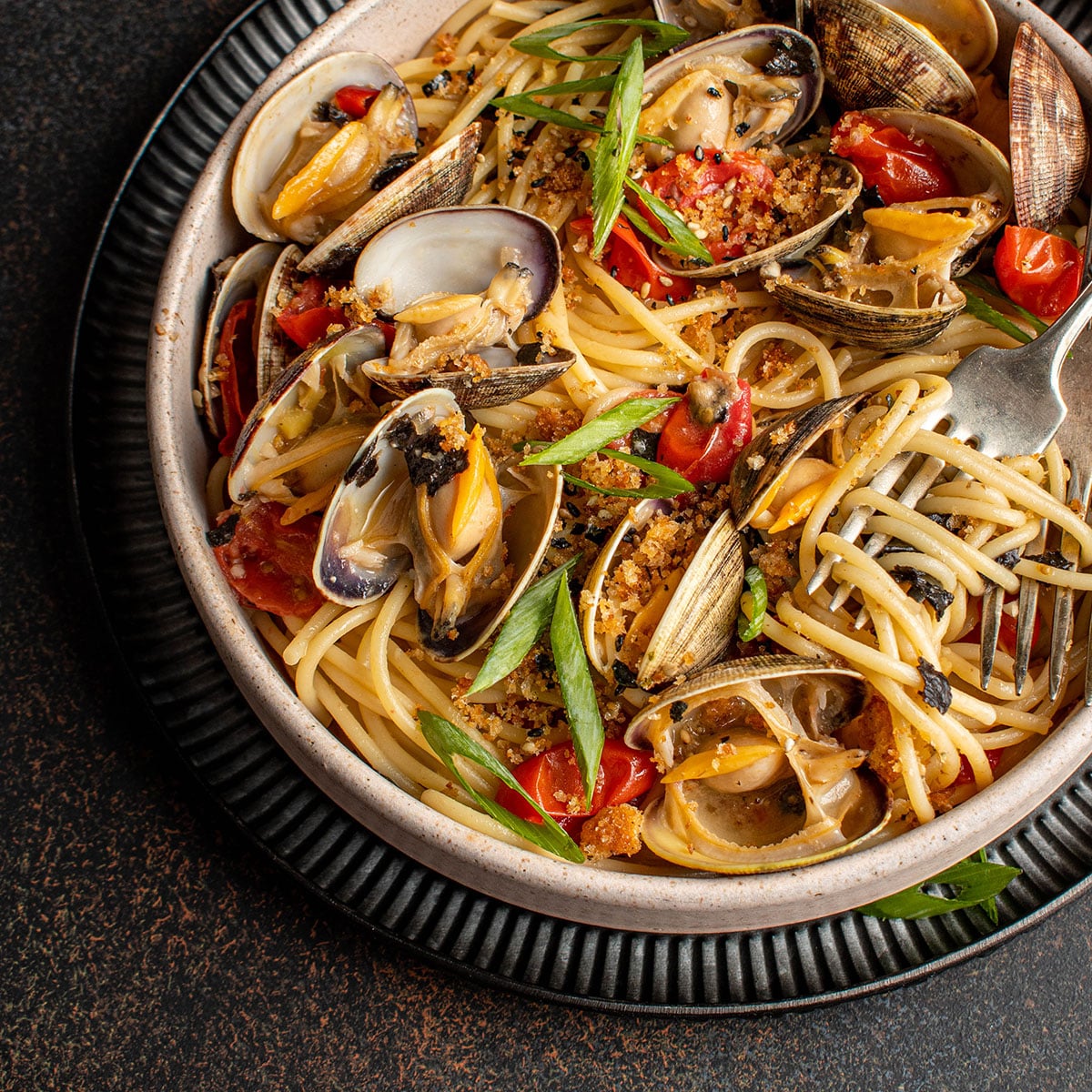
Imagine classic spaghetti alle vongole, then give it a full Japanese makeover with nori-spiked miso butter, a splash of sake, and crunchy furikake breadcrumbs. This spaghetti with clams and nori miso butter is where Italian comfort meets Tokyo umami, and it all comes together in under 45 minutes.


Jump to:
What makes this dish special
If you haven't noticed before, I am OBSESSED with Japanese food. Ever since my trip to Tokyo many years ago, there hasn't been a week when I haven't had a Japanese meal. I'm constantly looking for the best Japanese restaurant here in LA to bring me a bit closer to Tokyo.
Today, I'm bringing it to the kitchen, creating a dish inspired by Japanese and European cuisines. Here is my new favorite seafood pasta dish, spaghetti with clams and nori miso butter.
You may be thinking, "Nori miso butter?" But that's outrageous!" Trust me, it's delightful. The combination of salty, a little sweet, and a punch of umami dresses up the pasta in a unique and delicious way. If you need a little excitement on your table tonight, I urge you to give this dish a try!
Recipe

Spaghetti with Clams and Nori Miso Butter
Ingredients
Nori miso butter
- ¼ cup butter softened at room temperature
- 1 tablespoon white miso
- 1 tablespoon mirin
- ½ tablespoon soy sauce
- ¼ cup nori crumbled into small pieces
Seasoned breadcrumbs
- 1 teaspoon furikake
- ½ teaspoon garlic powder
- ¼ cup panko
- 1 tablespoon oil
Remaining ingredients
- 1 pound spaghetti
- 1 shallot minced
- 3 cloves garlic sliced
- 1 tablespoon ginger thinly sliced
- 1 Thai chile chopped
- 1 pint cherry tomatoes halved
- ¼ cup sake
- 2 pounds clams
- 2 scallions thinly sliced
Instructions
- Prepare nori miso butter. Combine all ingredients from butter to nori in a small bowl and mix until well combined. Set aside.
- Prepare breadcrumbs. Heat 1 tablespoon oil nonstick pan over medium heat. Stir together breadcrumbs with furikake and garlic. Add breadcrumbs to the pan and cook until golden brown, stirring constantly about 2-3 minutes. Remove from heat and set aside.
- Bring a medium pot of water to a boil. Cook pasta until al dente, about 8-9 minutes. Drain pasta, reserving ¼ cup of the pasta water.
- Meanwhile, heat 1 tablespoon oil in a large saute pan over high heat. Add shallot, garlic, ginger, and chile and saute until aromatic, about 30 seconds. Add cherry tomatoes and cook until the tomatoes begin to soften about 3 minutes. Add clams and sake. Cover the pan and cook clams until the shells begin to open about 4-5 minutes.
- Remove lid and toss in the cooked pasta, nori butter, and reserved pasta water. Season with salt and pepper. Stir the noodles with the clams and sauce, making sure to coat the noodles with the sauce. Remove from heat and sprinkle pasta with seasoned breadcrumbs and scallions. Serve immediately.
Notes
Step-by-step instructions
Step 1: Make nori miso butter
This spaghetti with clams and nori miso butter dish can come together pretty quickly, a great factor when preparing dinner during the week.
When I was working as a private chef and would prepare this dish for my clients, I would always make the nori miso butter and seasoned breadcrumbs several days in advance. This time, when it came to preparing the final dish, it would come together quickly.

For the nori miso butter, I used roasted salted seaweed, similar to the ones sold as snacks. Just be careful and taste the seaweed before adding it to the butter. Certain brands tend to be saltier than others.
If your roasted seaweed is on the saltier side, reduce the amount of soy sauce. It's also best to use softened butter, as it will be easier to mix all the ingredients.
For the seasoned breadcrumbs, use panko for the best results. Panko breadcrumbs have more of a crunch, adding texture to the pasta dish.
Step 2: Cook pasta
Now that the two flavor components are ready, it's time to get cooking.
Cook the spaghetti until al dente, reserving ¼ cup of the pasta water. The starchy water will help bring all the flavors together when combined. This tip can be applied whenever you make a pasta dish with a sauce!
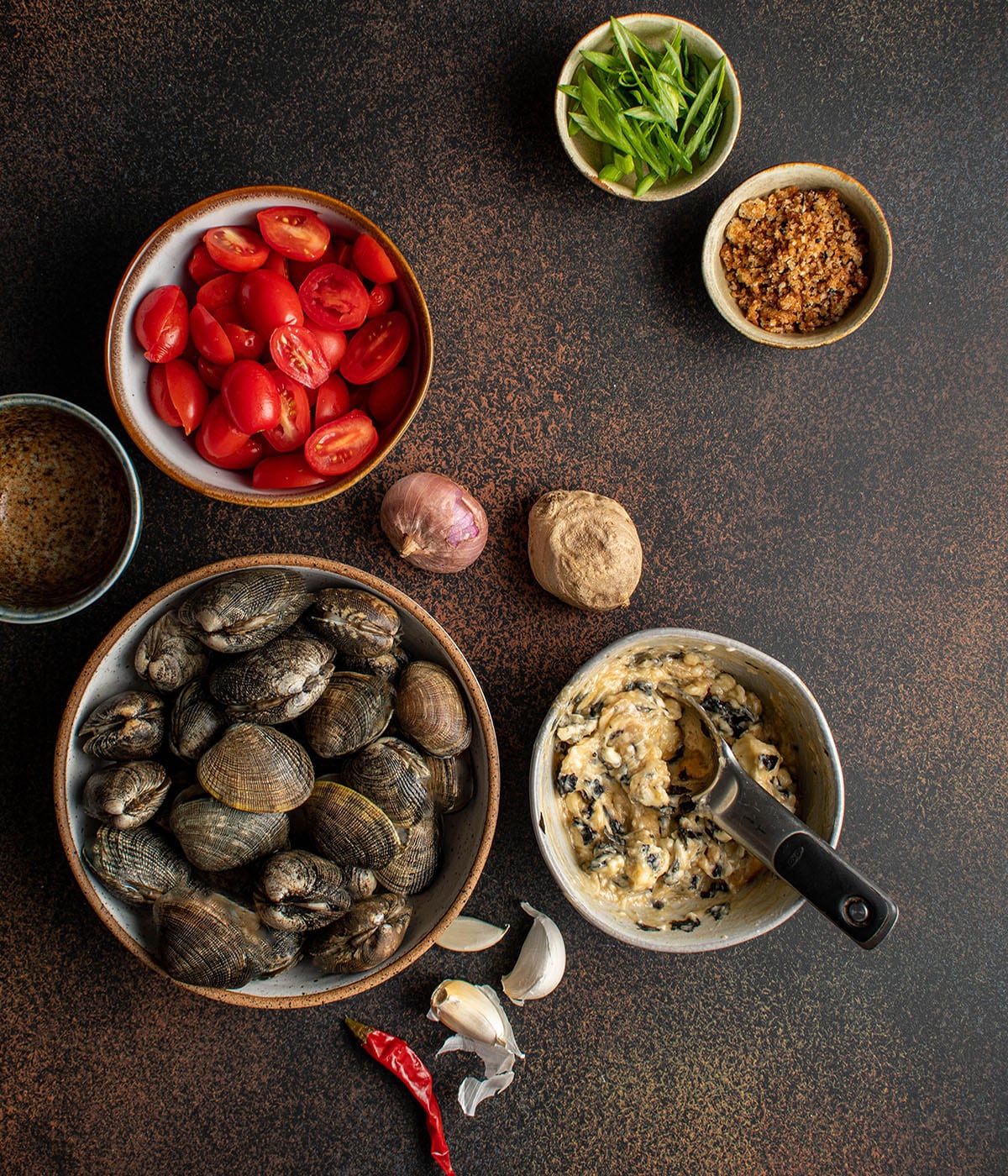
Next, cook the tomatoes with the aromatics. If cherry tomatoes aren't in season, you can use diced tomatoes, but the final sauce will be thinner since diced tomatoes have more moisture.
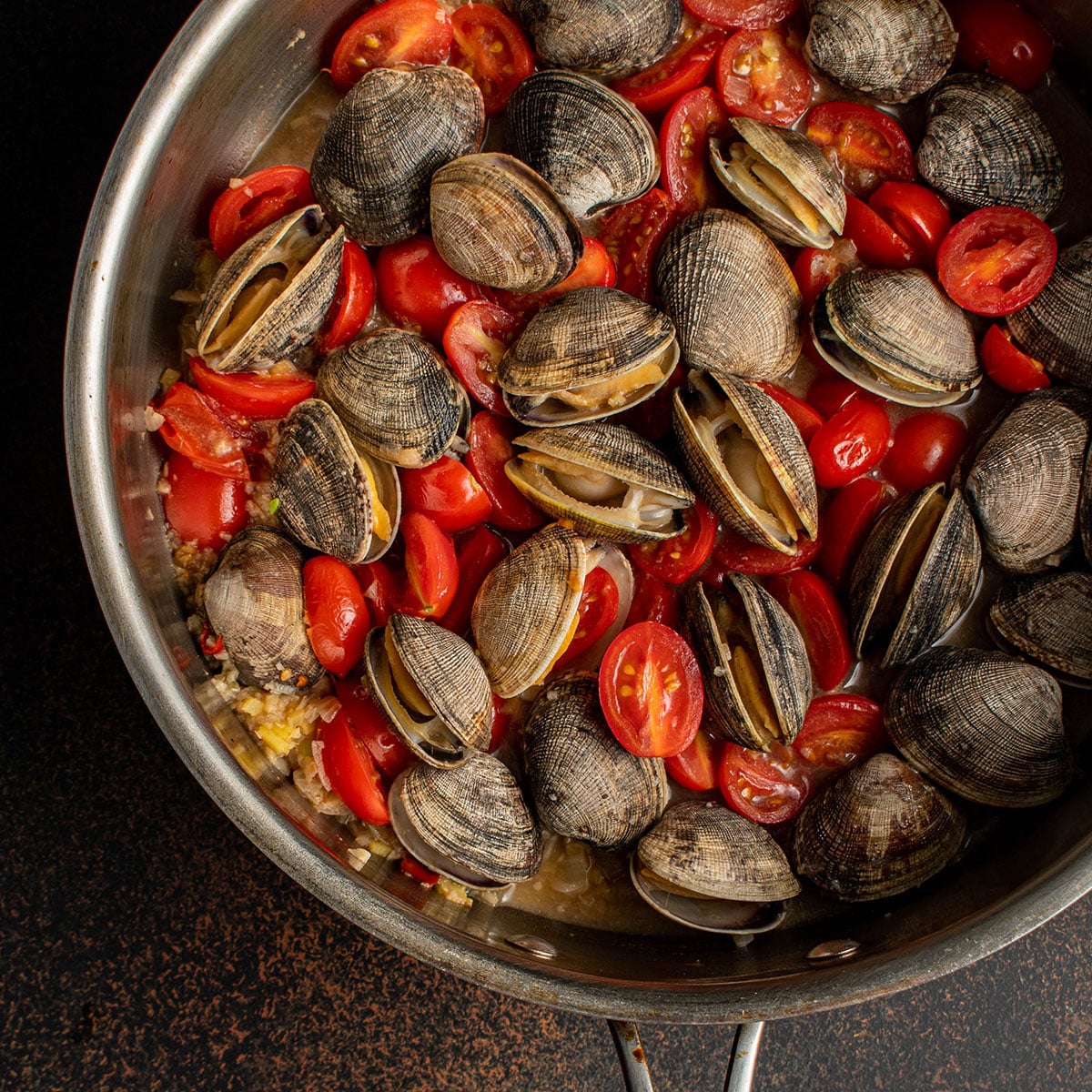
Once the cherry tomatoes begin to soften and burst, add the clams and sake. Make sure to cover the pan as the steam will help the clams open up. They won't take long to cook, about 4-5 minutes.
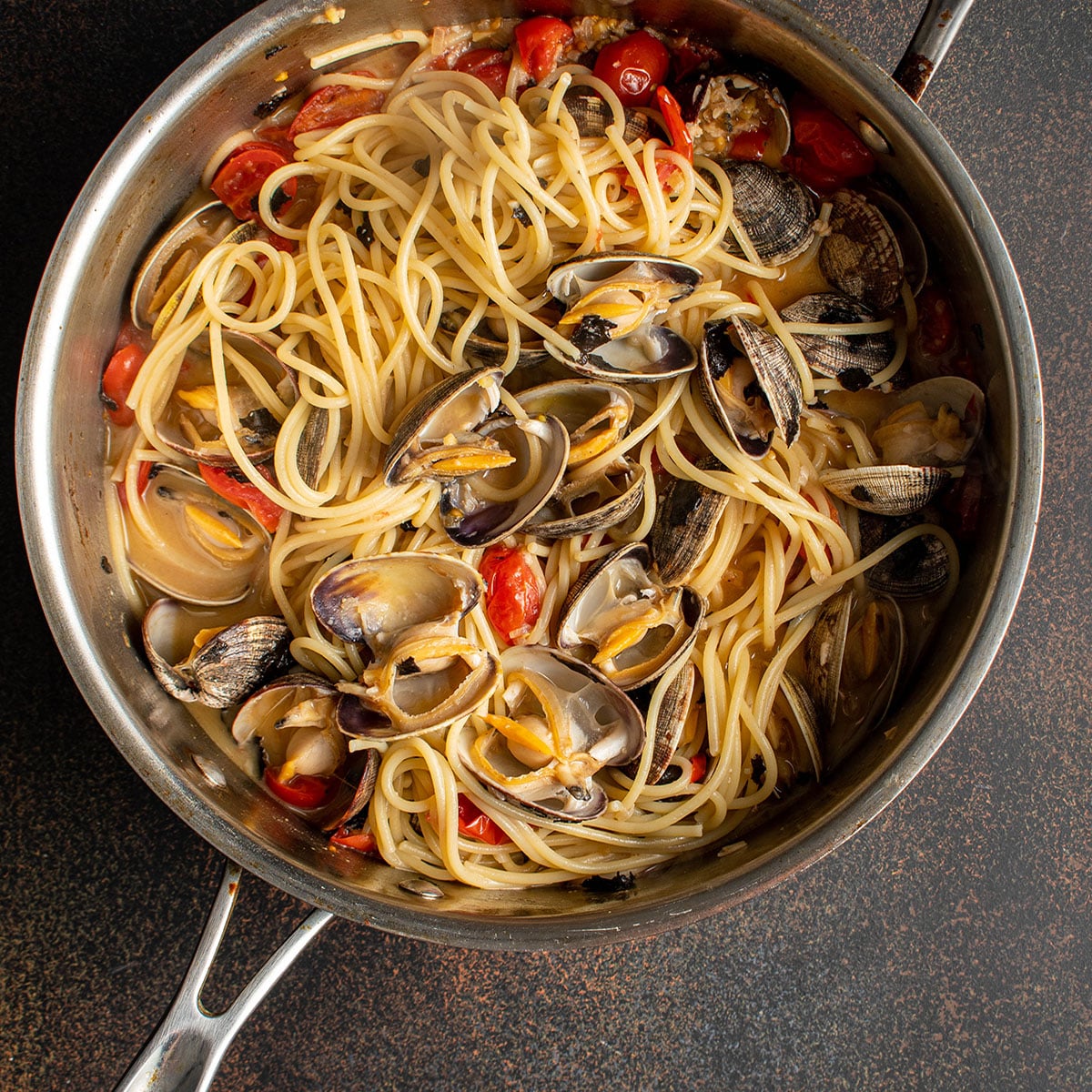
Add the pasta, nori butter, and reserved pasta water, and toss it all together. Let the butter melt and coat the noodles as well as the clams.
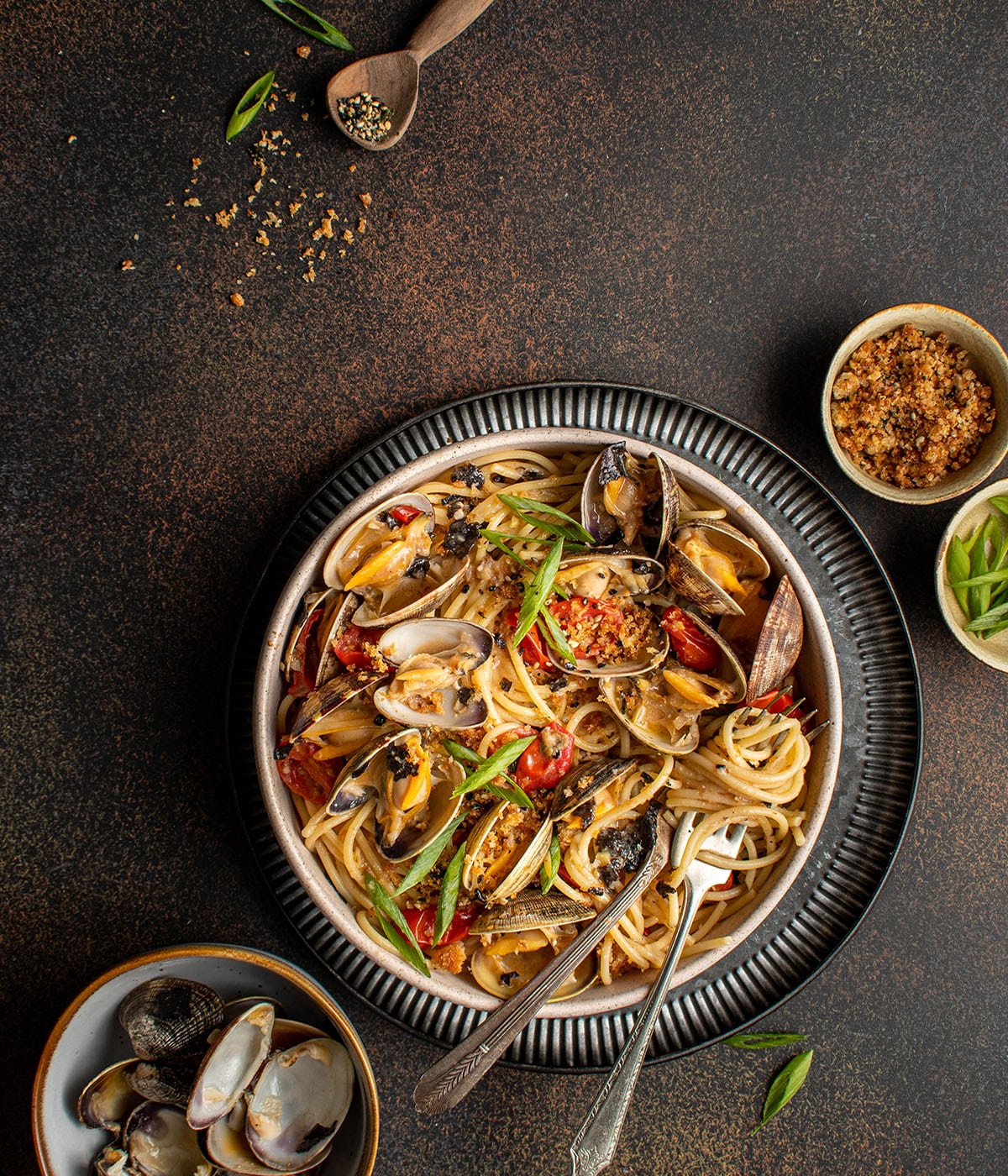
Season with salt and pepper and finish the spaghetti with a generous sprinkle of seasoned breadcrumbs and scallions.
I was initially a little unsure of how this spaghetti with clams and nori miso butter would turn out, but wow! I loved every bite. The nori adds a wonderful umami flavor to the pasta, complementing the miso and clams beautifully. Meanwhile, the sweet clams, bursting tomatoes, and furikake breadcrumbs add layers of textures of flavor to the final dish.
My clients love this dish, so I'm happy to say that it's a winner!
For more recipes featuring clams, check out this sheet pan clam bake, white clam roasted garlic pizza, and Thai coconut lemongrass clams!
Make-ahead and storage
- Make-ahead: You can make the nori miso butter and breadcrumbs up to 1 week in advance.
- Store: Keep leftovers in an airtight container in the refridgerator for up to 3 days.
More seafood pasta recipes
Looking for more seafood pasta ideas? Try these:


Work with me
All images shot and styled by Christine Ma. Available for food photography, styling, and recipe development.


Jon says
Is it OK to use canned clams? How would adjust the recipe?
Christine Ma says
I've never tried this recipe with canned clams but it should work. I would follow the recipe but add 2 tablespoons of canned clam juice along with the clams in step 4. Don't cover the pot after you add the clams, instead let the pan simmer so that the alcohol from the sake can cook down. Then, continue with the recipe following step 5. Let me know if this makes sense and if you have any other questions!